
Drywall and insulation contamination
When moisture gets into wall cavities, drywall and insulation often need controlled removal, bag-out, and cleaning of framing before rebuild.
Serving Dallas, Texas & surrounding areas
24/7 Emergency Response
Mold Remediation · Dallas, TX
Stop mold at the source with a clear inspection, safe containment, and documented cleanup for homes and commercial spaces across Dallas.
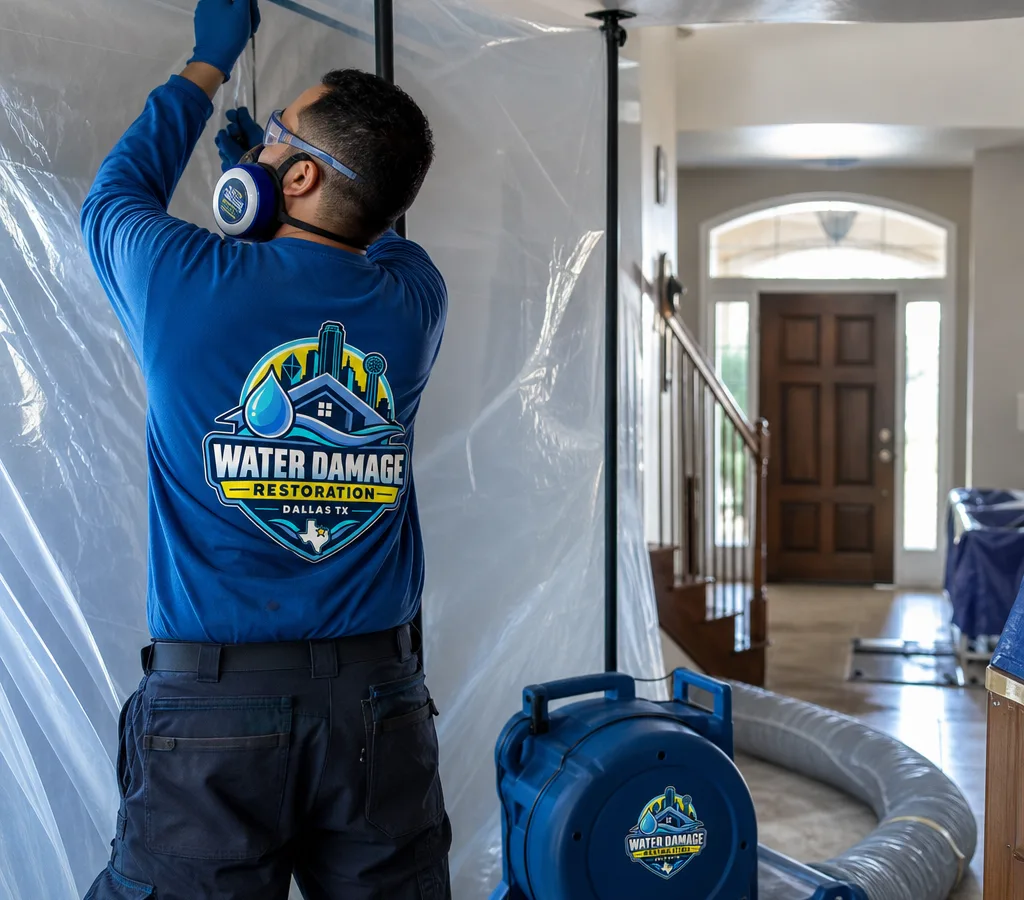
Professional remediation controls the work area, removes affected materials when necessary, and addresses the moisture conditions that allow mold to return.
Controlled, Documented Cleanup
Dallas mold remediation is more than spraying a surface and hoping it stays clean. A proper job removes contaminated materials when needed, cleans and HEPA-vacuums what can be saved, and controls airflow so spores are not spread into clean rooms.
Our team at Water Damage Restoration Dallas TX approaches mold problems like a trades job: identify the moisture source, define the affected area, set up containment, remove or clean based on the material, then verify the space is ready to put back together. You get a written scope that explains what will be done, what will be removed, how the area will be protected, and what the next steps are.
In North Texas, mold commonly shows up after indoor water events and chronic humidity issues: a slow plumbing leak under a sink, an HVAC condensate problem, a roof leak that wets insulation, or a wet drywall cavity that never fully dried. If the underlying moisture problem is not corrected, mold can return even after the best cleanup.
Protecting Clean Areas
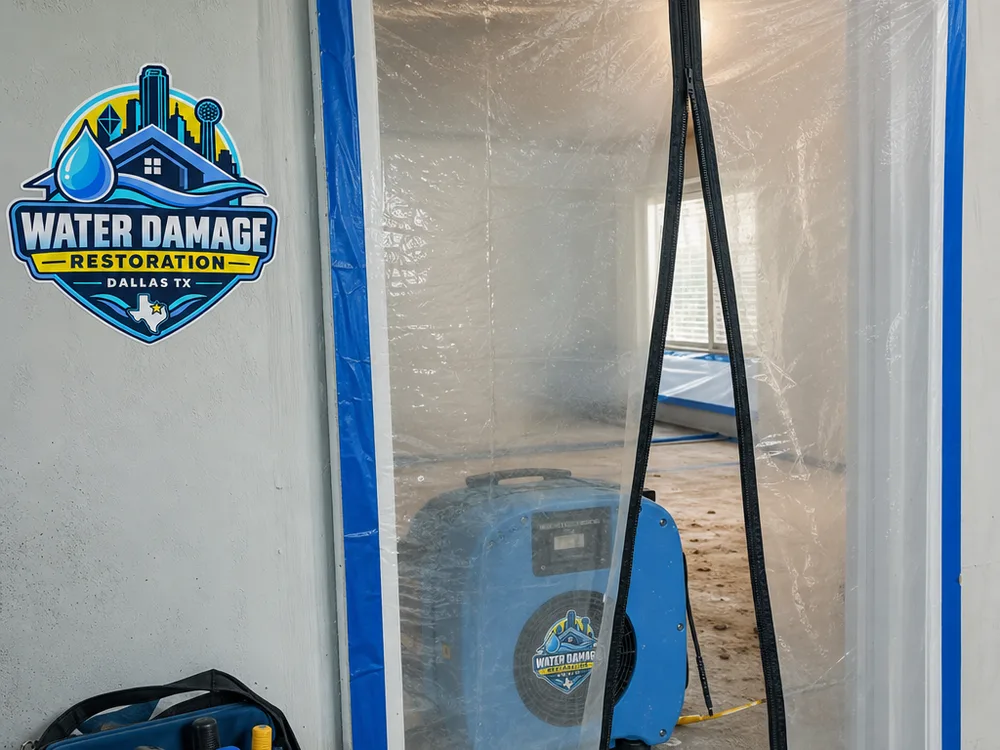
The biggest difference between professional mold remediation in Dallas and a DIY cleanup is containment. When moldy drywall, insulation, or carpet is disturbed, spores and fragments can become airborne. Containment creates a controlled work zone so the rest of the property stays protected.
Typical controls include:
This is especially important in occupied homes and active commercial spaces in areas like Uptown and Downtown Dallas where airflow from central HVAC, elevators, and shared corridors can move particles quickly. If you are not sure whether your situation needs full containment or a smaller, targeted setup, an on-site inspection is the right starting point.
Residential and Commercial
When moisture gets into wall cavities, drywall and insulation often need controlled removal, bag-out, and cleaning of framing before rebuild.
Leaks and ventilation issues can affect decking and framing. The plan depends on the extent, accessibility, and whether materials can be cleaned in place.
Condensate overflows and chronic humidity can lead to growth around supply returns, closets, and ceilings near air handlers.
Repeated wetting and poor exhaust can create mold behind baseboards, under flooring edges, and around tub or shower surrounds.
If a leak or overflow was not dried quickly, hidden moisture can lead to growth days later. Remediation starts with moisture mapping and targeted removal.
We work with property managers and business owners to isolate affected areas and keep disruption as low as the scope allows.
Inspect, Contain, Remove
The work follows a controlled sequence that starts with moisture conditions and ends with documented cleanup and practical next steps.
We inspect visible growth and check likely hidden areas with moisture meters and thermal imaging when appropriate. The goal is to understand what got wet, what stayed wet, and what materials are affected.
Before cleanup, we identify the cause—leak, condensation, ventilation, or a prior water event—and outline the containment level, removal versus cleaning, and access openings required.
We isolate the work zone and run HEPA-filtered air scrubbers to control airborne particles during removal and cleaning.
Porous materials with contamination are removed under containment. Remaining surfaces are HEPA-vacuumed and cleaned using appropriate antimicrobial products based on material type and conditions.
If the area is still damp, drying equipment may be needed. We then perform a detailed cleanup of the containment area so it is ready for repairs and rebuild.
You receive documentation of the work performed and practical guidance on preventing recurrence. If repairs are required afterward, we explain what needs to happen and what can wait.
Dallas Property Conditions
Construction type, access, airflow, and the original moisture event all shape the safest remediation plan.
Request Emergency ServiceDallas properties range from older pier-and-beam homes to newer slab construction and mid-rise condos. The structure affects both access and what can be safely removed or cleaned.
Older housing stock: Neighborhoods such as Lakewood can have more complex wall and crawlspace access, which changes how we isolate work zones and where we check for hidden moisture.
Condos and townhomes: Uptown properties often have shared walls and tighter mechanical closets, making dust control and clean entry paths a priority.
Newer North Dallas construction: Extensive HVAC distribution means humidity, condensate, airflow, and return paths require close attention.
Another Dallas reality is storm-driven water intrusion and sudden plumbing failures. If there was a recent leak or overflow, addressing drying early can reduce how much material needs to be removed. When water damage and mold overlap, coordinating both needs as one plan helps prevent competing scopes and unresolved moisture.
Dallas Remediation Cost
Mold remediation in Dallas typically ranges from about $1,200 to $6,500 for many residential projects, with small, well-contained areas on the low end and multi-room or hidden mold situations on the high end. A single-room cleanup with limited removal may be around $1,200 to $2,800, while larger jobs that include wall-cavity removal, attic work, or multiple containment zones can run $3,500 to $6,500+.
Final cost depends on the square footage affected, how many rooms need containment, what materials must be removed—drywall, insulation, or flooring—access constraints, and whether drying is required. The exact scope and price are confirmed after an on-site inspection and written work plan.
Customer Experience
“They found moisture behind the baseboards that we never would have seen. The containment kept the rest of the house clean, and the scope was clear about what had to be removed versus cleaned.”
Alyssa R.
“We manage a small office suite and needed the work done without shutting everything down. The team isolated the area, ran air scrubbers, and documented everything for our records.”
Mark T.
Practical Answers
Start times depend on the size of the job and whether drying or emergency source control is needed first, but many Dallas mold remediation projects can begin shortly after the inspection and written scope are approved. If there is active water intrusion or a fresh leak, stopping the moisture and setting up containment quickly usually reduces the spread and the amount of tear-out.
Often, you can stay in the home if the affected area can be fully contained and there is a clean route for crews to enter and exit. For larger projects, attic work with heavy debris, or situations involving sensitive occupants, it may be more comfortable to stay elsewhere during the most disruptive phases. We walk through access, containment boundaries, and HVAC considerations during the inspection.
Remediation decisions are usually based on the location, extent, and materials affected rather than the exact species, because the safe work practices are similar. If you need testing for documentation or a specific concern, we can coordinate the next step and keep the remediation scope aligned with what the property needs, not just a lab result.
Porous materials that are colonized or cannot be reliably cleaned are commonly removed, including drywall, insulation, some ceiling tiles, carpet pad, and damaged particle board. Framing lumber and many hard surfaces can often be cleaned with HEPA vacuuming and appropriate antimicrobial cleaning, then dried to normal moisture levels.
Mold remediation should not proceed until the moisture source is stopped or controlled, otherwise the conditions for regrowth remain. In practical terms, we can still inspect, map moisture, and write the plan right away, but the remediation work should be scheduled so the leak repair and drying are addressed first.
Many projects take 1 to 3 days of active work for containment, removal, cleaning, and cleanup, but timelines vary with access, the number of rooms, and whether drying is required. Hidden mold behind cabinets or inside wall cavities can add time because controlled openings and careful debris handling are needed.
Inspect Before Disturbing It
Tell us what you are seeing and where it is showing up. We will inspect the area, identify moisture conditions, and provide a written scope for safe, professional remediation in Dallas, TX.