
Rapid extraction and controlled drying
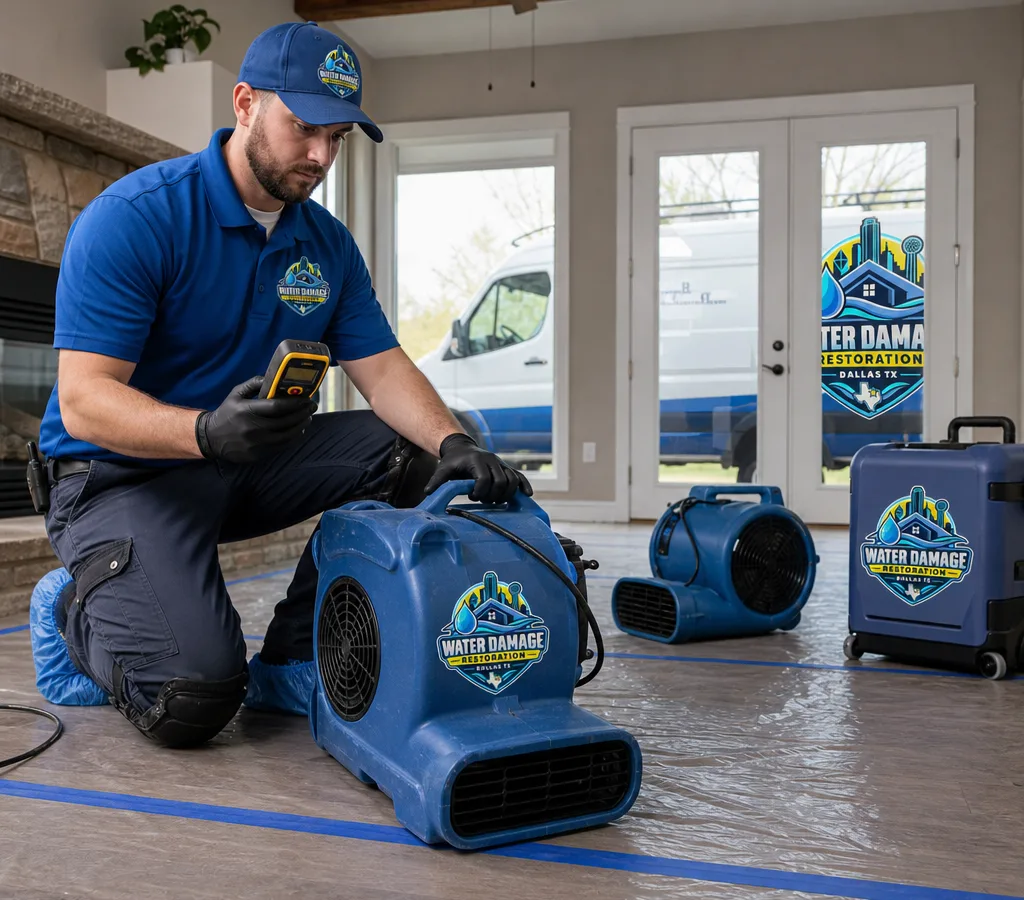
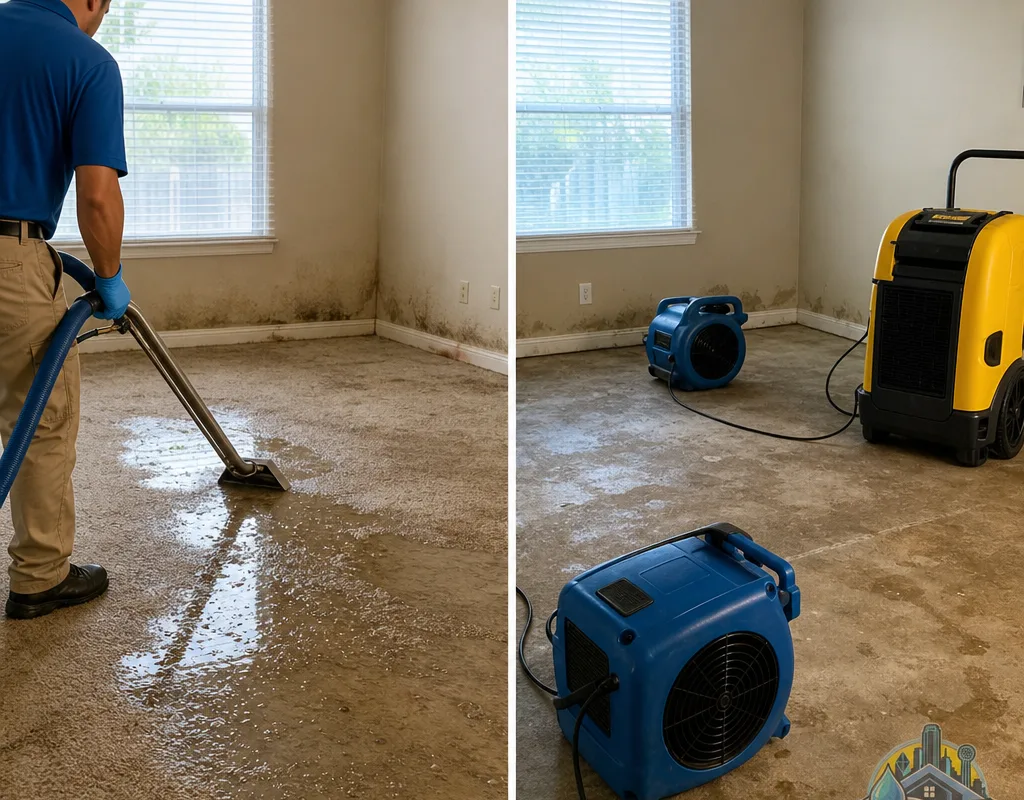
We remove standing water with professional pumps and extractors, then set air movement and dehumidification sized to the affected area so materials dry consistently instead of only on the surface.
Serving Dallas, Texas & surrounding areas
24/7 Emergency Response
Water Mitigation · Dallas, TX
When water gets into building materials, time matters. Our local team responds fast to extract water, set professional drying, and document conditions so you can protect the structure and limit avoidable repairs.
Stabilize the Property
If you are searching for water mitigation Dallas help, you are usually dealing with an active leak, standing water, or wet building materials that can turn into swelling, delamination, and mold risk if drying is delayed. Water mitigation focuses on stopping the source when safe, extracting water, controlling humidity, and drying structural materials back to an acceptable moisture condition.
In Dallas, water events often involve slab-on-grade homes, multi-story townhomes, and commercial spaces where water can move under flooring or down wall cavities before it shows up. That is why our approach starts with moisture mapping and containment planning, not guesswork. We work in Dallas, TX 75201 and surrounding areas, and keep the scope centered on mitigation: stabilize the property now so later repairs, if any, are smaller and clearer.
For a broader overview of related help after a water event, including coordination and next steps beyond mitigation, many customers start with water damage restoration in Dallas.
Measured Drying, Clear Decisions
We remove standing water with professional pumps and extractors, then set air movement and dehumidification sized to the affected area so materials dry consistently instead of only on the surface.
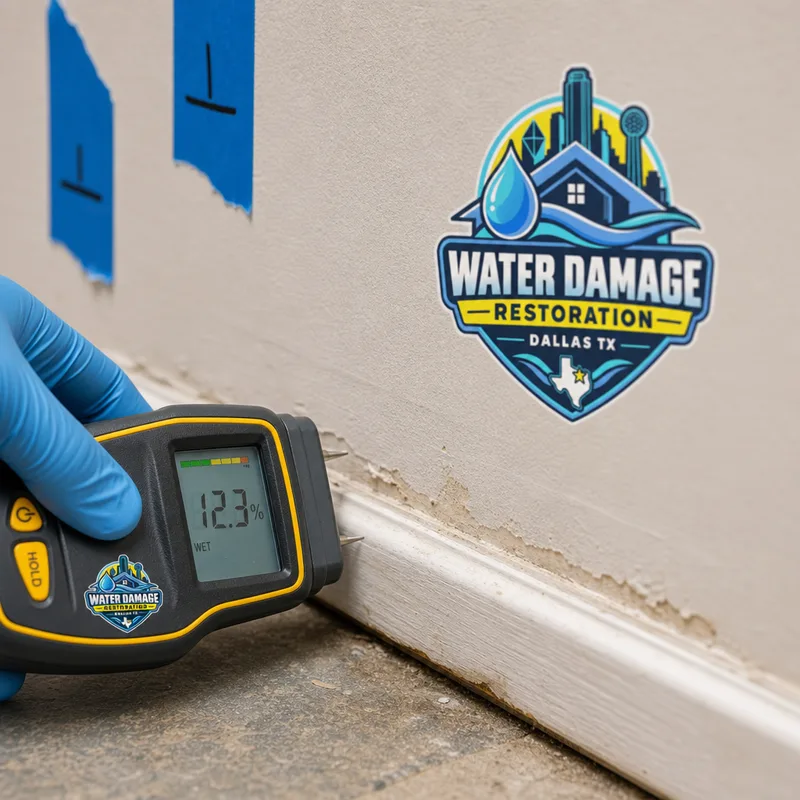
We use moisture meters and thermal imaging checks where appropriate to identify wet areas behind baseboards, under flooring, and at wall bottoms, then track drying progress with documented readings.
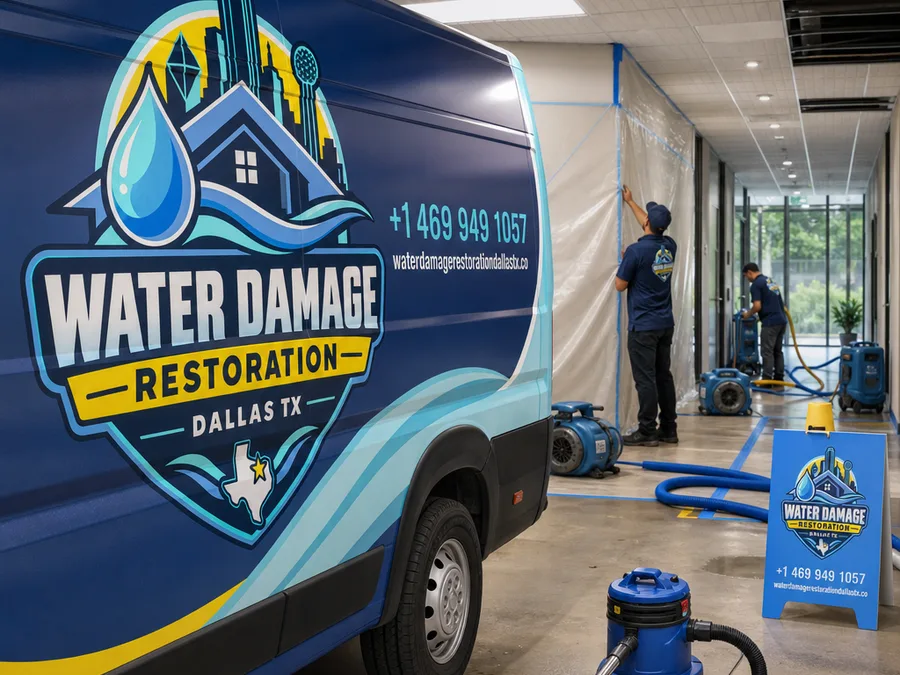
When needed, we use plastic barriers and negative air practices to keep damp air and debris from spreading, especially in occupied homes, offices, and multi-unit buildings.
Drywall, insulation, hardwood, engineered wood, and cabinets do not all respond the same way. We explain what can often be dried in place versus what typically needs removal for proper drying access.
You get a written plan that outlines affected areas, equipment placement, monitoring cadence, and the conditions required to demobilize, so you know what is happening day to day.
The Critical First Hours
Water mitigation is a race against absorption. Wood trims swell, engineered flooring can cup, drywall can wick moisture upward, and humid indoor air can slow evaporation. Early steps make a measurable difference in how much material has to be removed.
Typical early priorities include:
In dense Dallas neighborhoods with shared walls or stacked units, moisture can migrate into adjacent spaces through penetrations and wall cavities. We plan mitigation around how the building is constructed, not just where the water is visible.
Assess, Extract, Dry, Verify
Each phase follows documented conditions, with equipment and access decisions adjusted as the affected materials dry.
We assess the affected rooms, likely migration paths, and the category of water present, then document starting conditions with moisture readings and photos.
We extract water and remove only what is needed to access trapped moisture, such as saturated pad, swollen baseboards, or small drywall flood cuts when drying access requires it.
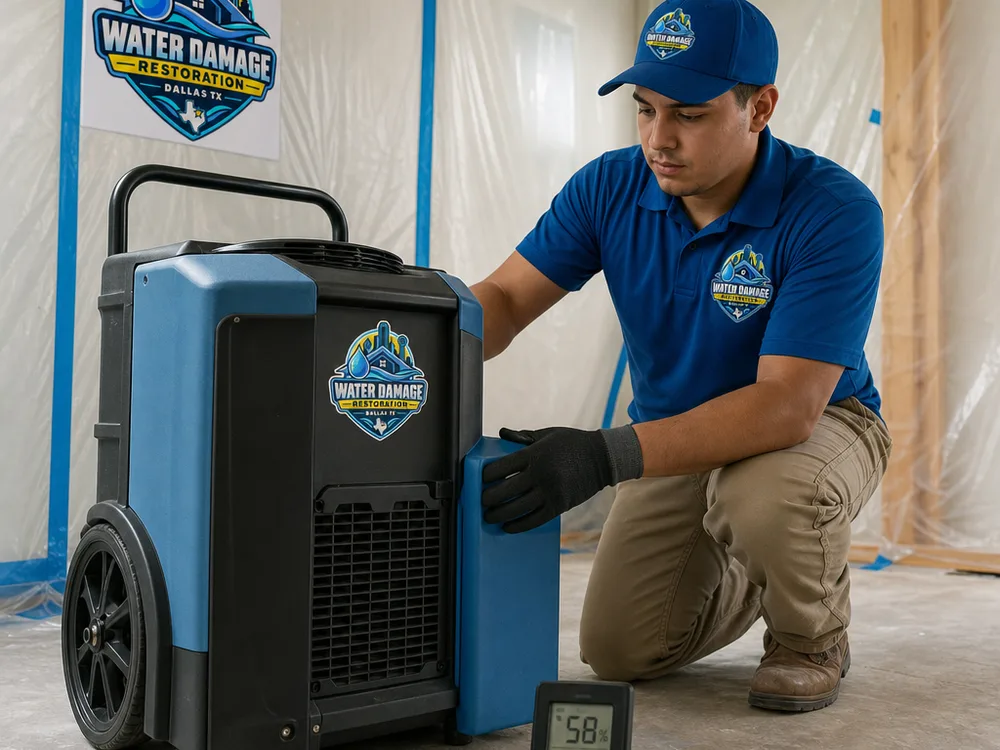
We place air movers and dehumidifiers to drive evaporation and pull moisture out of the air, using containment where appropriate to keep drying focused and efficient.
We return to track moisture reduction, adjust equipment, and confirm drying goals. If readings plateau, we change the plan rather than letting equipment run without results.
We remove equipment once targeted materials reach an acceptable dry condition based on documented readings and material type, then provide a clear handoff for any next-phase repairs.
Dallas Mitigation Cost
Water mitigation in Dallas typically ranges from about $900 to $4,500 for many residential situations, with larger losses and multi-room drying running $5,000 to $12,000+ when extensive extraction, containment, and multiple days of equipment are needed. A small localized leak with limited drying may be on the low end, while a supply line break affecting floors and walls pushes costs up.
Final pricing depends on how many rooms are wet, how long materials stayed saturated, water category, access under floors or behind cabinets, required demolition for drying access, and how many days equipment must run. Exact cost is confirmed after the on-site inspection and moisture mapping.
Professional Drying in the Field
Customer Experience
“They showed up quickly, mapped the wet areas, and explained why the water was traveling under the flooring. The drying plan made sense and the daily check-ins kept us from wondering what was happening.”
Erica M.
“We had water in an upstairs room that dripped down to the first floor. They set containment, ran drying equipment, and documented readings until it was dry enough to start repairs.”
James R.
Practical Answers
In most situations we can start the same day, and the goal is to begin extraction and drying as soon as the site is safe to enter. Early response matters because moisture spreads through drywall, flooring systems, and wall cavities, which can increase how much material must be removed to dry properly.
Water mitigation covers stopping or verifying the source is controlled, extracting water, removing limited materials for drying access when necessary, setting and monitoring drying equipment, and documenting moisture conditions. Repairs like replacing drywall, flooring installation, painting, and finish carpentry are typically a separate phase after the structure is dry.
Sometimes, yes, but only when readings show moisture wicking in drywall or trapped behind finishes. In Dallas homes with baseboards tight to slab or with dense insulation in exterior walls, removing a small section can improve airflow and let the cavity dry correctly; if materials are minimally affected, drying in place may be appropriate.
Many drying projects take about 3 to 5 days, but the timeline depends on how saturated the materials are, whether water got under flooring, indoor humidity, and how much of the affected area can be opened up for airflow. We confirm progress with moisture readings, not by the calendar.
Yes. We document affected areas, equipment used, and moisture readings during monitoring so there is a clear record of why mitigation steps were needed and when drying goals were reached. Coverage decisions are handled by the carrier, but good documentation reduces back-and-forth.
Often it is, especially for localized losses, but it depends on the affected areas, the type of water, and whether containment is needed. We will walk through what areas to avoid, where equipment will run, noise expectations, and any recommended temporary relocation if conditions warrant it.
Start With Moisture Mapping
Tell us what happened and what areas are wet. Water Damage Restoration Dallas TX will confirm next steps, inspect and moisture-map the affected space, and put a clear drying plan in writing before the situation gets more expensive.