
Containment that protects clean areas
We isolate affected rooms with poly sheeting and controlled access, and we use negative air when appropriate so airborne spores are drawn into filtration instead of drifting through the home.
Serving Dallas, Texas & surrounding areas
24/7 Emergency Response
Mold Removal · Dallas, TX
If you smell a musty odor, see staining, or have had a recent leak, the safest next step is a professional inspection and a containment plan before spores spread to clean areas.
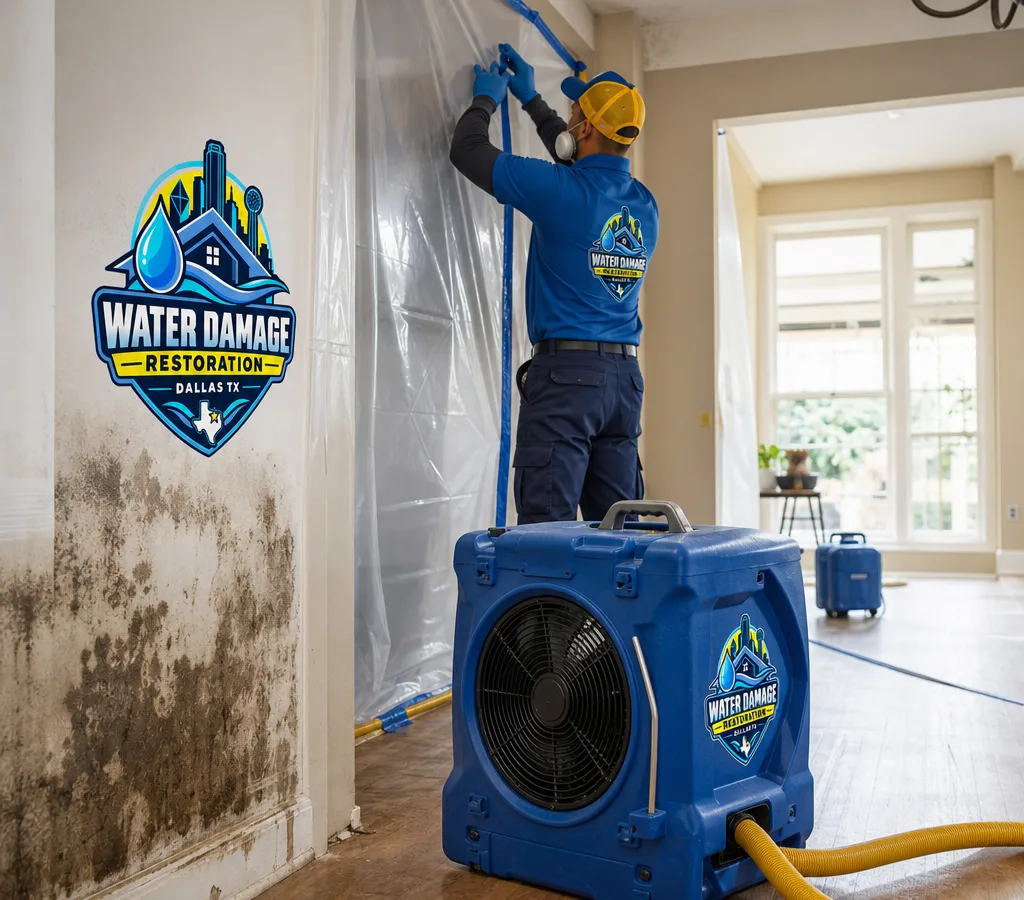
Professional mold removal finds the moisture source, isolates affected areas, removes materials that cannot be saved, and protects clean rooms during the work.
Controlled Mold Cleanup
Dallas mold removal is about more than wiping down a surface. Mold often grows behind drywall, under flooring, inside cabinets, or in attic and HVAC-adjacent spaces after moisture gets in. The right approach is to find the moisture source, isolate the affected area, remove contaminated materials when needed, and clean the air so the rest of the building stays protected.
At Water Damage Restoration Dallas TX, our mold remediation work in Dallas, TX is built around proven containment and cleanup methods used across the industry. We focus on clear scopes, practical recommendations, and doing the work in a way that protects occupied spaces.
If you are also dealing with a recent leak or flooding, start with water damage restoration in Dallas so the moisture problem is handled at the source before or alongside remediation.
Safe, Accountable Work
We isolate affected rooms with poly sheeting and controlled access, and we use negative air when appropriate so airborne spores are drawn into filtration instead of drifting through the home.
Mold returns when moisture returns. We look for likely drivers such as plumbing leaks, roof intrusions, condensation, or humidity issues and explain what needs to change to prevent repeat growth.
HEPA air scrubbers and HEPA vacuuming are standard tools for capturing fine particles during and after removal, followed by detailed cleaning of remaining surfaces within the work zone.
Porous items like drywall, insulation, carpet pad, and some pressed-wood products can hold contamination. When cleaning cannot reliably restore them, controlled removal and disposal is the safer option.
You get a written scope and a walk-through of what will be contained, what will be removed, what will be cleaned, and what is needed to keep the area dry after the work is complete.
Finding Hidden Moisture
Mold needs moisture and a food source such as paper-facing drywall, wood framing, dust, or fabric. In Dallas, we often see mold concerns after storm-driven water intrusion, slow plumbing leaks, or high indoor humidity during hot months.
Common places we inspect:
A musty smell, discoloration, or recurring allergy-like symptoms indoors are all reasons to schedule an on-site evaluation. The goal is to confirm what is affected, determine whether it is likely active, and set boundaries so the cleanup is controlled and effective.
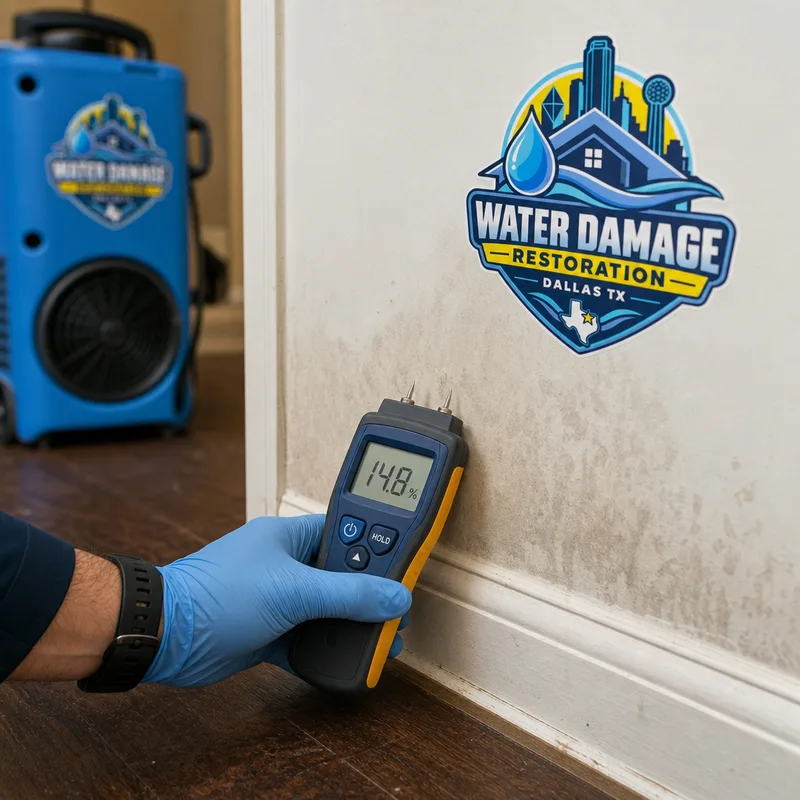
Assess, Contain, Remove
The work follows a controlled sequence that protects clean areas, removes affected materials, and confirms the space is dry before repairs move forward.
We assess the affected areas, look for likely moisture sources, and check surrounding materials for hidden impact. If sampling is requested, we can discuss practical options and what results can and cannot tell you.
Before removal begins, we define the work area, set protection for floors and pathways, and establish containment. When conditions warrant it, negative air and HEPA filtration are used to control airborne particles.
Drywall, insulation, carpet padding, and other porous materials that cannot be reliably cleaned are removed in a controlled way. Debris is bagged and handled to limit cross-contamination.
We clean remaining structural surfaces in the work zone, HEPA vacuum, and wipe down with appropriate methods for the material. The goal is to remove residues, dust, and settled spores created during the disturbance.
We confirm the area is dry and review what needs to happen next, including any rebuild considerations if materials were removed. If a third-party clearance test is being used, we coordinate access for it.
Dallas Mold Removal Cost
Dallas mold removal typically ranges from about $1,500 to $6,500 for many residential projects, with small, contained areas sometimes closer to $750 to $2,000 and larger multi-room or HVAC-adjacent jobs reaching $8,000+ depending on demolition and drying needs. Final pricing depends on the size of the affected area, how much material must be removed, how hard it is to access, and whether drying equipment and containment are needed. The exact cost is confirmed after an on-site inspection and a written scope.
Request Emergency ServiceIf you are seeing signs of mold, getting an inspection now can limit demolition later. Share what you are noticing and we will map out the safest next steps for your property.
Call for Emergency HelpCustomer Experience
“We had a musty smell that kept coming back after a small plumbing leak. They found wet drywall behind the vanity, set up containment, and explained exactly what needed to be removed versus cleaned. The air smelled normal again once everything was dried out.”
Megan P.
“The part I appreciated most was how they protected the rest of the house during removal. The work area was sealed off, and they walked us through what to watch for so it does not happen again.”
Carlos R.
Practical Answers
Mold can begin growing within 24 to 48 hours when materials stay wet, so timing matters after a leak or storm intrusion. The practical takeaway is to dry the area quickly and avoid disturbing suspected growth until containment is planned, since disturbing it can spread spores to clean rooms.
It depends on where the mold is and how the work is contained, but many projects can be done while occupants stay elsewhere in the home. If the affected area involves bedrooms, HVAC pathways, or large open areas, temporary relocation is sometimes the safer option, especially for anyone with asthma, allergies, or immune concerns.
Porous materials like drywall paper facing and insulation often need removal when they are contaminated, because they are difficult to clean thoroughly. Non-porous and semi-porous surfaces can often be cleaned and HEPA-vacuumed within containment when the underlying structure is sound and dry.
Yes, mold in attics and near HVAC components is a common scenario, but the fix must include the moisture driver. In attics that can be roof intrusion, condensation, or bathroom exhaust ducting issues; around HVAC it can be condensate drainage or airflow and humidity problems. We explain what we can remediate and what should be corrected to keep it from returning.
Testing is optional in many real-world situations because visible growth and moisture damage already justify controlled remediation. Testing can help when you are trying to confirm whether a hidden issue exists, document conditions for a property transaction, or coordinate with a third-party clearance process after remediation.
Avoid scrubbing or spraying bleach on suspected areas, and do not run fans that could move spores into other rooms. If you can, note when the problem started, whether there was a leak, and which rooms have odors or staining so the inspection can focus on likely moisture paths.
Inspect Before Disturbing It
Tell us what you are seeing and where, and we will schedule an on-site evaluation, outline containment and cleanup steps, and provide a written scope you can trust before work begins.